
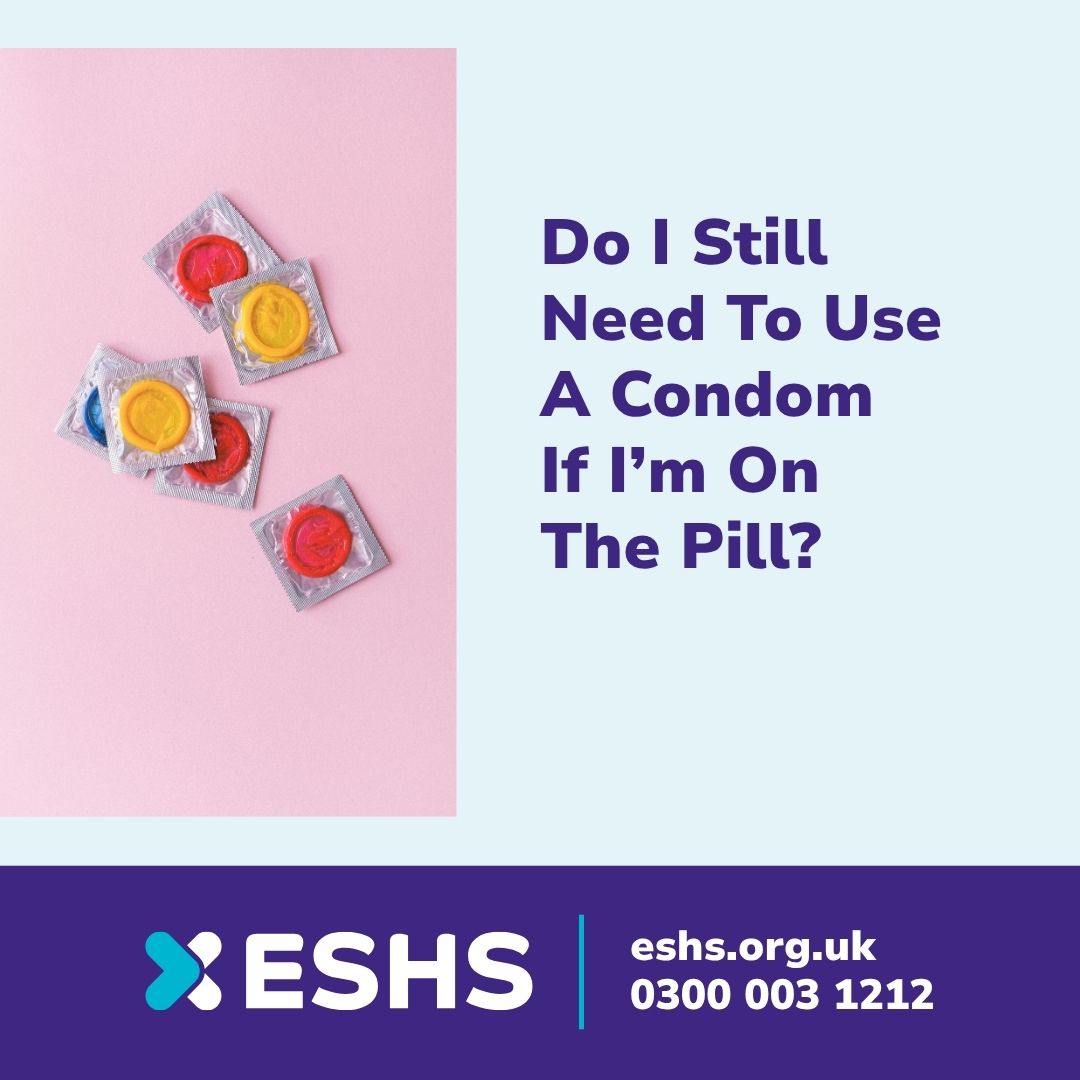
“I’m on the pill, so I don’t need condoms anymore… right?”
It’s a common question, and the answer is simple: the pill and condoms do different jobs.
The contraceptive pill is highly effective at preventing pregnancy when taken correctly, but it doesn’t protect you from sexually transmitted infections (STIs). That’s why, for many people, using condoms as well as the pill is still the best option.
What does the pill protect against?
The contraceptive pill is designed to prevent pregnancy by stopping ovulation or making it harder for sperm to reach an egg.
When taken correctly, it’s over 99% effective at preventing pregnancy. However, in everyday use, forgetting pills or taking them late can make it less effective.
What doesn’t the pill protect against?
The pill offers no protection against STIs, including:
- Chlamydia
- Gonorrhoea
- Syphilis
- HIV
- Genital herpes
- HPV
Many STIs don’t cause symptoms, meaning you or your partner could have one without knowing. That’s why regular testing is important if you’re sexually active.
Do I still need to use condoms?
In many situations, yes.
Condoms are the only widely available method of contraception that help protect against both pregnancy and STIs.
Using the pill and condoms together is known as dual protection, giving you extra peace of mind.
Condoms are particularly recommended if:
- You’re having sex with a new partner.
- You or your partner have more than one sexual partner.
- You don’t know each other’s STI status.
- You haven’t both recently had an STI test.
What if I’m in a long-term relationship?
Some couples choose to stop using condoms once they’ve both had STI tests and are in a mutually exclusive relationship.
The important thing is that this decision is based on honest conversations and informed choice, rather than assuming the pill provides complete protection.
What if I miss a pill?
Missing pills can reduce your protection against pregnancy.
Depending on which pill you’re taking and how many you’ve missed, you may need to:
- Use condoms for a short time.
- Consider emergency contraception.
- Follow the guidance in your pill packet or speak to a healthcare professional.
If you’re unsure, don’t guess, seek advice as soon as possible.
The bottom line
The pill is an excellent way to prevent pregnancy, but it isn’t a replacement for condoms.
Remember:
- The pill helps prevent pregnancy.
- Condoms help protect against both pregnancy and STIs.
Using both together gives you the best protection, especially with new or casual partners.
Need advice or an STI test?
If you’d like advice about contraception, need an STI test, or want to discuss which method is right for you, Essex Sexual Health Service is here to help.
You can order a free STI self-test kit, explore contraception options and access confidential support through our website. Order free condoms via the eC-Card app.